It costs less than a coffee and arrives in brown paper that turns translucent with oil within seconds. A slice is roughly triangular, three or four millimetres thick, thinner at the rim where the crust has gone the colour of dark honey. No leavening, no toppings, no plate. You eat it standing, done in under a minute.
This is cecìna. We rate it among the three most important things to eat on the Versilia coast, alongside fresh fish from the Forte market and the right gelato in the right hour. Also the cheapest.
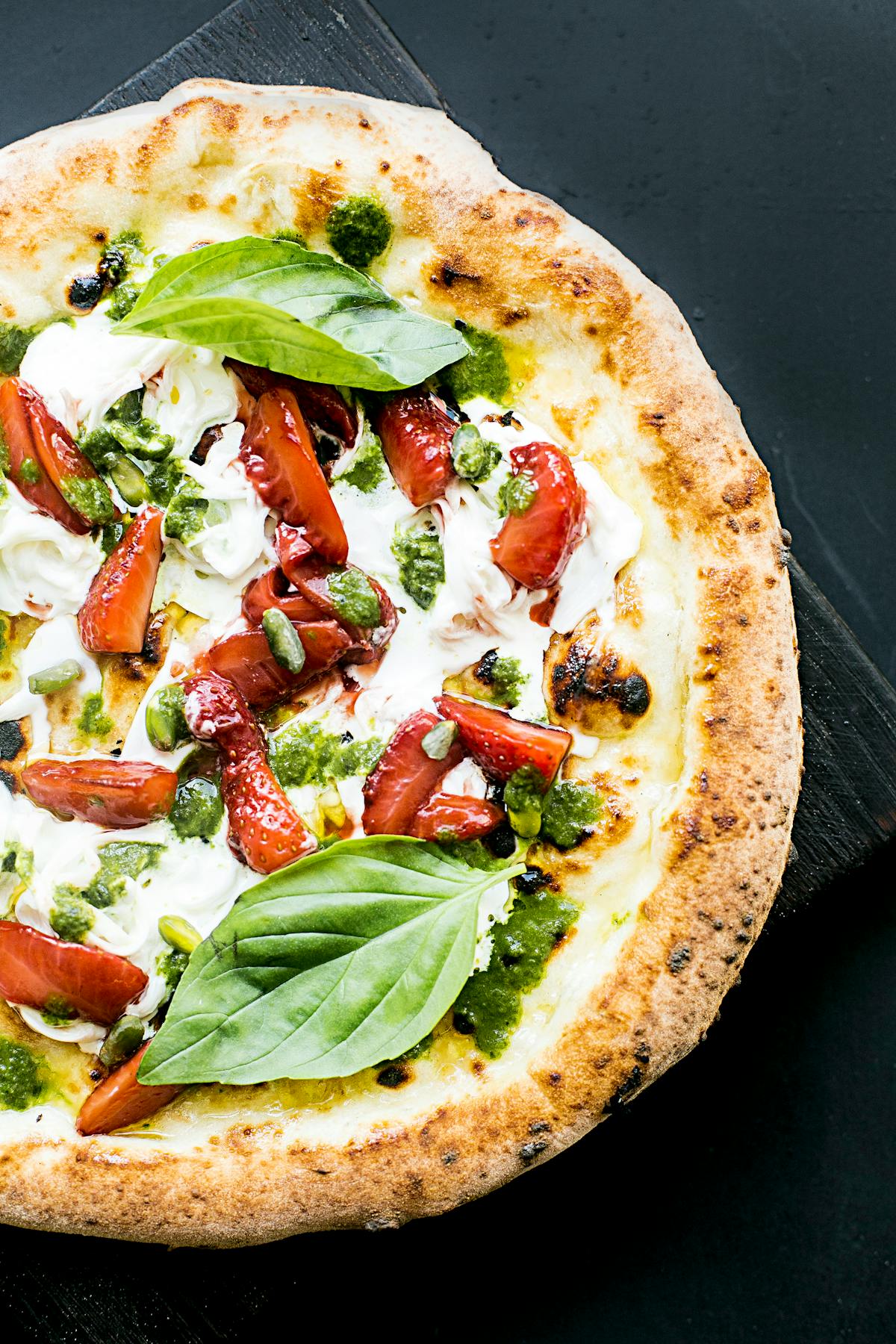
What cecìna actually is
A four-line recipe. Chickpea flour, water, a generous pour of olive oil, salt. No yeast, no baking powder, no eggs. Batter rests for several hours — a few producers we trust let it sit overnight — until it loses its raw-flour smell and the chickpea proteins relax into something pourable.
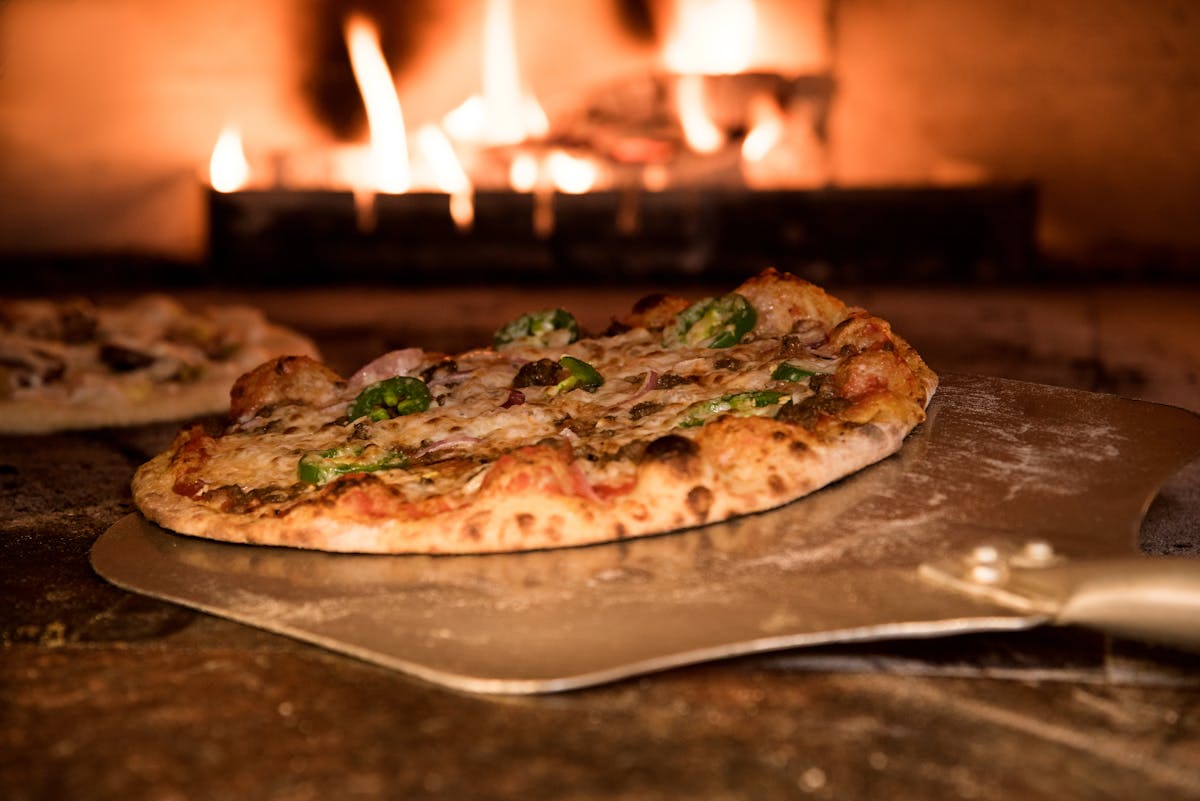
Ladled into a wide, shallow copper pan — a testo di rame, sometimes nearly a metre across — and slid into a wood-fired oven hot enough to char the upper crust within minutes. Texture is paradoxical: a crisp, freckled top; a custardy interior halfway between thick crêpe and savoury flan; an underside with the metallic hum of copper.
Two styles are commonly recognised. Cecìna rossa is darker, crisper, baked longer, sometimes brushed with a little extra oil at the edges. Cecìna bianca is paler, softer in the middle, more of a custard. Asking which is correct is futile; a better question is which the baker has just pulled from the oven.
The name problem
One small pleasure of eating along this coast is watching what the same dish is called in successive towns. On the Tuscan side of the border: cecìna, sometimes torta di ceci. Cross north into Liguria — fifty minutes by train — and it becomes farinata, with a more militant edge to the regional pride. Continue into France and it is socca, thicker, charred harder, served with pepper rather than salt.
Pancake doesn't change. Vocabulary, defended traditions, and willingness to argue for forty-five minutes over a glass of vermentino — those do.
For practical purposes: ask for cecìna and you will be understood. Farinata works too, especially closer to the Ligurian border around Massa. Torta di ceci is a menu name; nobody actually orders it that way. Some gastronomic literature exists via the Slow Food movement, which catalogues regional grain and legume traditions as part of its presidi programme.
Four shops worth the walk
We do not name producers gratuitously. Bakeries change hands, change ovens, retire. Four places below are described generically because we expect this list to be revised within the season — what we are pointing at is the type of place, not the signage.
- A long-standing bakery on Via Battisti, Viareggio. Wood-fired copper pan, mid-morning bake, sold out by 13:00. Leans rossa: dark, smoky, edges audibly crisp. €2.20 a slice. Closed Sundays.
- A pizza-by-the-slice counter near the cathedral in Pietrasanta. Two batches — before noon and late afternoon. Slightly thicker than the Viareggio version; pairs well with focaccia from the same oven. Cash only. ~€2.50.
- A producer near the Forte dei Marmi market. Tiny operation, two bakes a day, queue at 12:15. Softest interior of the four — near-custard. Best eaten within ninety seconds of leaving the oven. ~€3; price reflects postcode more than flour.
- A historic forno on the central piazza of Camaiore. Inland by ten kilometres, on the regional bus line. Austere style — less oil, more structural integrity, holds up if you walk with it. Closed Mondays and the first three weeks of August.
How to eat it
Salt and black pepper. Generously. Both should be on the counter; a baker who does not put them out is failing a basic civic duty.
Classic Versilia move: cecìna in focaccia — a slice folded inside warm focaccia, around two hundred grams, about four euros. Starch on starch, oil on oil, and one of the most satisfying handheld lunches available on the Italian coast. Vegetarian by accident, vegan if you skip the focaccia (most contain only flour, water, oil, salt — verify if it matters).
| Order | What you get | Price range | Time to eat |
|---|---|---|---|
| Una fetta di cecìna | One wedge, paper-wrapped | €2 – €3 | Under a minute |
| Cecìna in focaccia | Wedge folded inside focaccia | €4 – €5 | Three to five minutes |
| Mezza teglia | Half-pan to take away | €8 – €12 | Better shared |
| Teglia intera | Whole pan, ordered ahead | €16 – €22 | Feeds four to six |
Wine is optional and often inappropriate — most of these slices are eaten between 11:00 and 13:00, before cafés switch from coffee to aperitivo service. If you must, a glass of vermentino from the nearby Colli di Luni hills works honestly with cecìna; a sharper, mineral profile cuts through the chickpea fat. Beer is fine. Coca-Cola, surprisingly, is also fine and not infrequent.
What comes with it — usually nothing
Cecìna is not a dish that builds out into a meal — a punctuation mark in a longer day of eating. No traditional accompaniment beyond the focaccia option and the salt-and-pepper ritual. Any menu listing it as an antipasto with truffle oil or stracchino is catering to tourists who have read about it but not yet eaten it. Skip those.
Honest accompaniment is whatever is happening around the bakery — a market across the canal, pecorino bought five doors down, coffee from the bar opposite. Bridge food: cheap, fast, regional, ungarnished.
For canal-front commerce around these morning bakeries, see The Canale Burlamacca Dawn Market. Natural continuation of any cecìna circuit is our Viareggio Gelato Round, best two hours later. For those crossing the coast to find the Forte producer named obliquely above, The Forte dei Marmi Fish Market is a four-block detour. Broader Tuscan coastal food context appears in Lonely Planet's Tuscany pages; individual-bakery reports (read with scepticism) are aggregated on TripAdvisor.